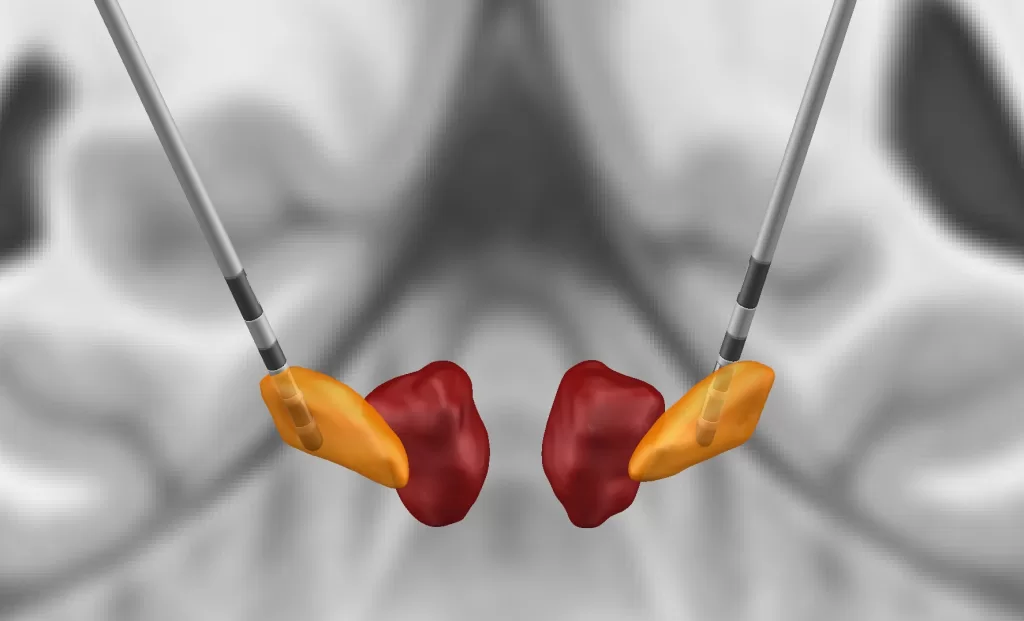
Target selection in Deep Brain Stimulation (DBS) for Parkinson’s disease is a critical step that directly influences treatment outcomes. The process hinges on a detailed assessment of a patient’s symptoms, disease progression, and response to medications, allowing clinicians to tailor the intervention for optimal benefit.
Main DBS Targets in Parkinson’s Disease
- The most common brain targets for DBS in Parkinson’s disease are the subthalamic nucleus (STN) and the globus pallidus internus (GPi).
- Selection between these sites depends on individual patient characteristics:
- STN DBS is often chosen for patients with severe motor fluctuations or dyskinesias who can tolerate a reduction in their dopaminergic medication.
- GPi DBS may be preferable for patients with prominent dyskinesias or those at higher risk of cognitive or mood side effects, as it has less impact on neuropsychiatric functions.
Clinical Factors Guiding Target Choice
- The decision-making process incorporates:
- Predominant symptoms (tremor, rigidity, bradykinesia, dyskinesia)
- Patient age and cognitive status
- Psychiatric comorbidities
- Anticipated medication adjustment post-surgery.
The Role of Multidisciplinary Team
- A multidisciplinary evaluation including neurologists, neurosurgeons, psychologists, and specialized nurses is essential to match the most appropriate target to the individual.
Importance of Imaging and Intraoperative Testing
- Advanced neuroimaging helps delineate anatomical targets, while intraoperative electrophysiological mapping and clinical testing further refine electrode placement to maximize benefits and minimize side effects.
Choosing the right DBS target is a blend of science and art, centered on patient-specific goals and challenges, which ensures the best possible quality of life improvement for those living with Parkinson’s disease.
Here is a table summarizing the main Deep Brain Stimulation (DBS) targets for Parkinson’s disease and their key characteristics in target selection:
| DBS Target | Indications | Advantages | Considerations |
|---|---|---|---|
| Subthalamic Nucleus (STN) | Severe motor fluctuations, dyskinesias | Allows reduction in medication | May have higher risk of cognitive/psychiatric side effects |
| Globus Pallidus Internus (GPi) | Prominent dyskinesias, cognitive risk factors | Less impact on mood and cognition | Often chosen if medication reduction is not desired or possible |
| Other targets (e.g., Thalamus) | Tremor-dominant Parkinson’s | Effective for tremor control | Less effective for rigidity/bradykinesia |
This table highlights how clinical factors guide the personalized selection of DBS targets to optimize treatment outcomes in Parkinson’s disease.